
OEM Rehabilitation Equipment — Manufactured to Your Specification
OEM means we build to your specification rather than ours. At JinDa Rehab Medical, OEM projects start from an existing frame platform wherever possible — which keeps MOQ at 300–500 units — and move to a new tool only when the geometry genuinely requires it.
The difference between OEM and private label is who owns the specification. In an OEM project you bring the drawing, the sample or the target specification, and the factory is responsible for meeting it repeatably. That changes what the quotation has to contain: not just a unit price, but the critical dimensions, the tolerances, the material grade and the test that proves each one.
Most OEM enquiries we receive can be met from an existing platform with a modification — a different tube length, a different seat, an additional brace. That is worth checking first, because it keeps the MOQ at 300–500 units instead of the 1,000+ a new mould usually requires, and it shortens the schedule by several weeks.
When a new tool is genuinely needed, we quote it separately and state who owns it. Tool ownership matters more than buyers expect: if the tool is paid for in the unit price rather than as a line item, moving to a second supplier later becomes impossible.
Specification and MOQ
| Starting MOQ | 300–500 units on a modified existing platform |
| New tooling | Quoted separately, ownership stated on the PI |
| Materials | Aluminium 6061/7075, steel, PU, PP, EVA, TPR |
| Processes in house | Tube cutting, bending, welding, powder coating, assembly, packing |
| Documentation | Drawing, critical dimension list, batch test report, DoC |
| Production time | 15–30 days after approval (plus tooling lead time where applicable) |
| Certifications | CE (EU MDR Class I), FDA registration, ISO 13485, ISO 9001 |
What can be customised
- Frame geometry changes from your drawing
- Material and wall thickness specification
- Load rating targeting with test verification
- Component substitution to your approved list
- Private tool ownership
Certifications held: CE (EU MDR 2017/745) · FDA registered & listed · ISO 13485 · ISO 9001 — see how to verify each one.
Models in this range

White Extra-Wide Heavy-Duty Stainless Steel Shower Chair
MOQ: 100 units

Adjustable 150kg Foldable Commode Chair
MOQ: 300 units
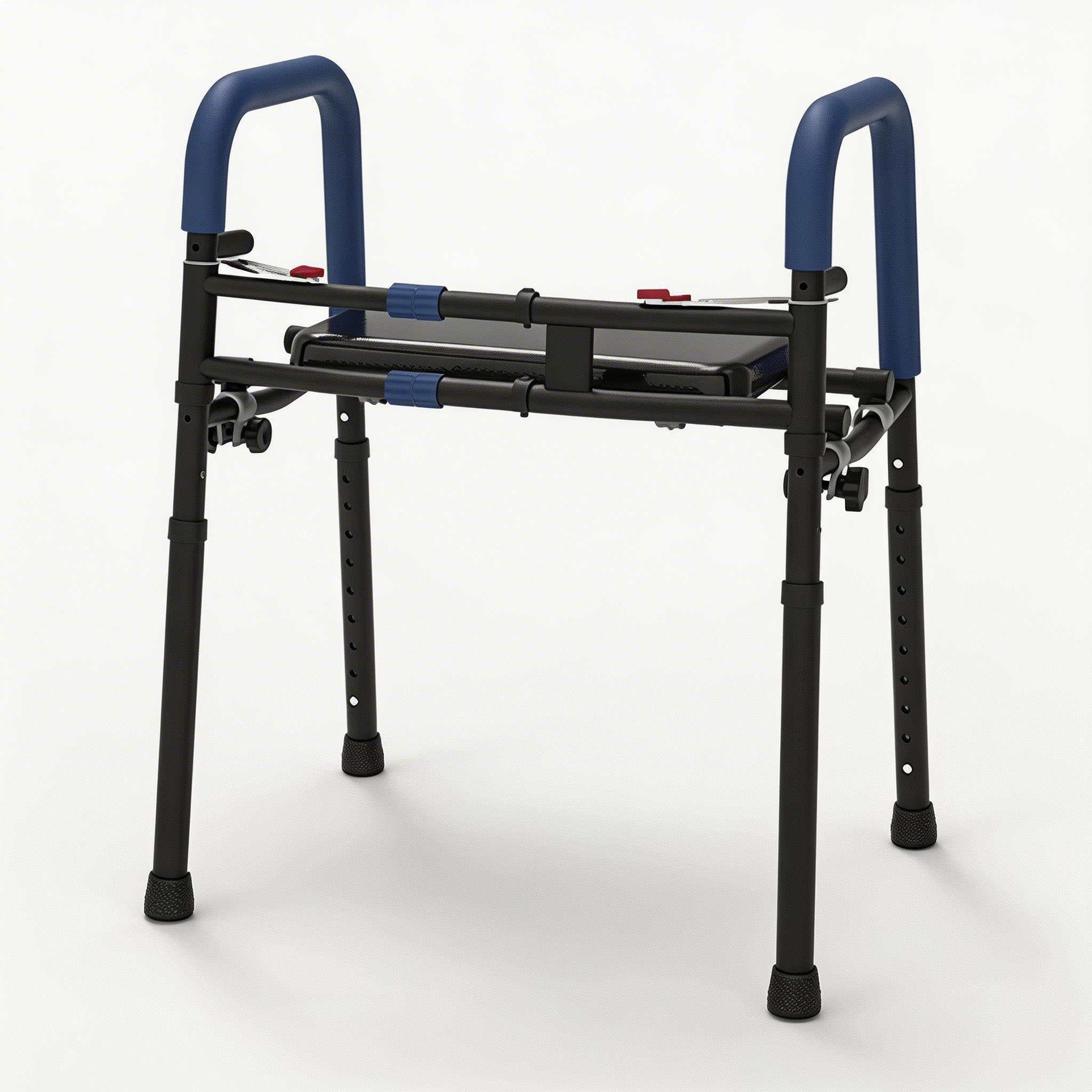
Foldable Stainless Steel Medical Walker with Seat
MOQ: 100 units